Your Most Important Dataset Probably Has No Real Owner
and that's dangerous

Shen Pandi
May 07, 2026
Most organizations assume dataset ownership is implicit because a team originally created the pipeline. In production, that ownership layer quickly decays.
Transformations evolve through undocumented patches, maintainers change, and downstream dependencies expand without governance metadata keeping pace.
What remains is a business-critical dataset with no clearly defined owner for schema evolution, SLA enforcement, semantic validation, or downstream impact management.
When upstream fields drift or transformations introduce inconsistencies, teams discover the pipeline exists in production, but operational accountability does not.
This is how governance failures become operational failures
The failure rarely begins with a visible outage. It starts when semantic consistency across systems begins to drift
What this typically looks like in production:
Finance detects reconciliation gaps between recognized revenue and billing ledger exports
Product analytics reports conflicting user counts across regions or environments
Transformation logic changes silently without visibility into which downstream models inherited the new behavior
Metric definitions diverge even though all pipelines continue executing successfully
From an infrastructure perspective, nothing appears broken. Pipelines complete successfully, orchestration jobs remain green, and dashboards continue refreshing on schedule. The underlying issue is that governance metadata does not exist at the same granularity as the transformations themselves.
Without explicit ownership attached to datasets, lineage layers, and business rules, schema evolution becomes operationally untraceable.
Teams end up reconstructing accountability manually through Git commits, Slack escalations, and query history because the warehouse can explain how data moved, but not who was responsible for changing its meaning.
The real problem is not access control. It is accountability at the metadata layer
Most governance strategies focus on permissions, compliance, and access policies. Those controls matter, but they do not solve operational accountability.
The harder problem is identifying who owns the semantic definition of a dataset, who approved a transformation change, who validated a quality regression, and which downstream systems inherited the impact of that decision.
Consider a finance reporting pipeline where a team modifies the revenue recognition logic by changing how refunds are excluded during aggregation. The schema remains unchanged, the pipeline executes successfully, and dashboards continue refreshing.
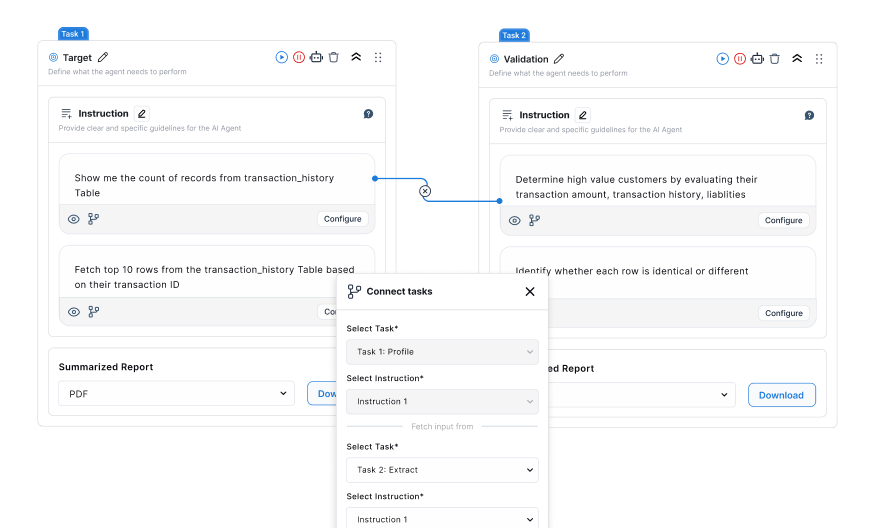
Two weeks later, finance notices that quarterly revenue no longer reconciles with Stripe exports, while sales dashboards still show the old totals because they depend on a different downstream transformation branch.
This is where DataManagement.AI’s Data Lineage & Governance becomes operationally critical. Instead of manually tracing SQL models, Git commits, and orchestration logs, teams can immediately identify:
which transformation introduced the logic change
which engineer or team owns that pipeline
which downstream dashboards and models inherited the updated definition
which reports are now operating on divergent revenue logic
Teams can also engage directly with the Damian chatbot to get instant AI-driven support for workflow queries, lineage analysis, ownership tracking, and dataset-level impact investigation without manually searching across pipelines and metadata layers.
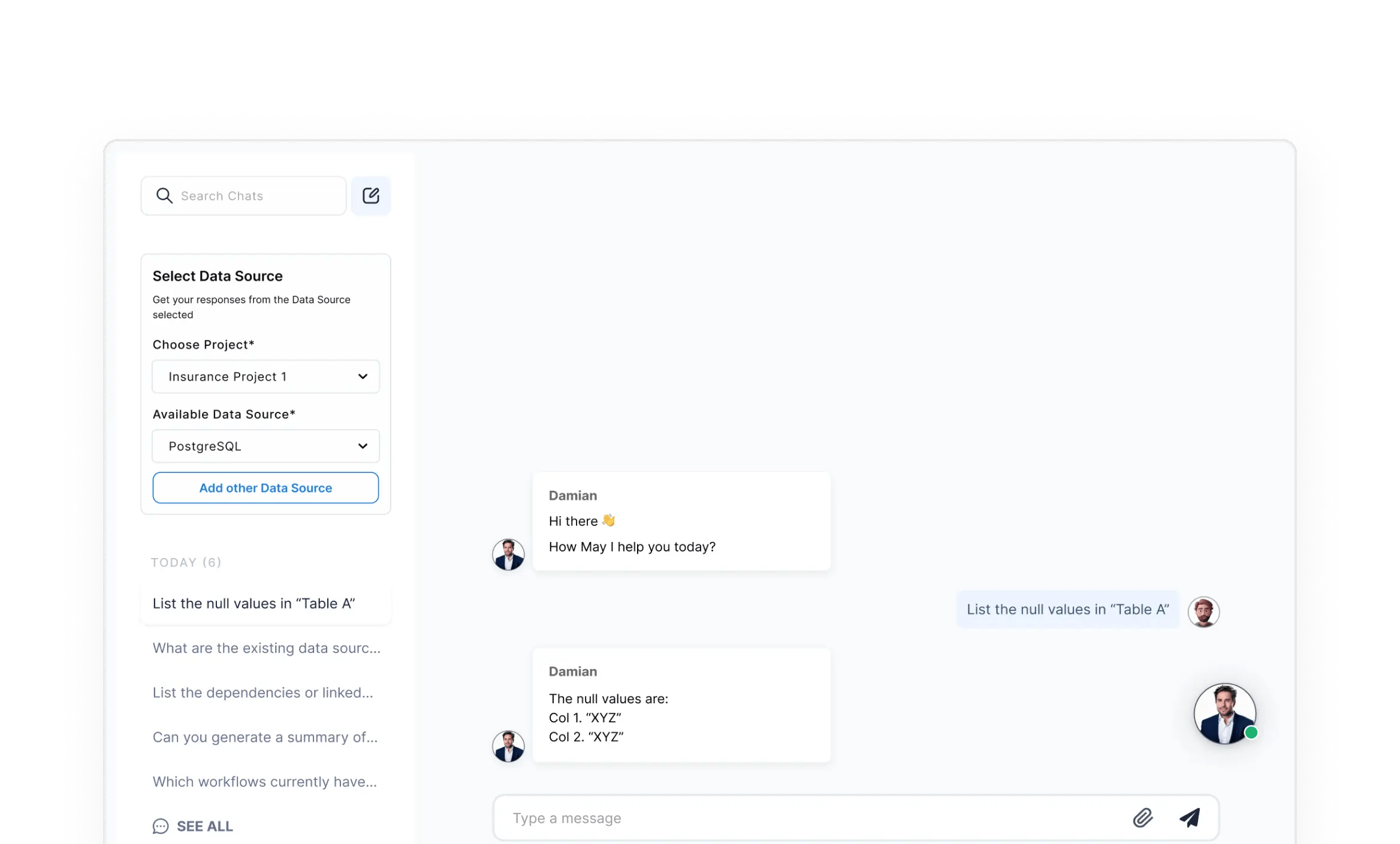
By connecting lineage, schema histories, ownership metadata, and downstream dependencies into a unified graph, DataManagement.AI turns governance into an executable operational layer instead of static documentation that nobody updates.
The longer ownership stays ambiguous, the harder trust becomes to recover
Once ownership ambiguity spreads across critical datasets, every reporting issue becomes harder to isolate. Analysts stop trusting shared models, teams rebuild local versions of metrics, and executives begin questioning whether dashboards represent operational reality or just another interpretation of it.
At that point, governance is no longer a compliance discussion. It becomes a systems reliability problem where the business can no longer confidently explain how its own metrics are produced, validated, or maintained.
The practical fix is to operationalize ownership directly into lineage, transformation, and monitoring layers so accountability travels with the data instead of living in disconnected documentation.
Warms regards,
Shen Pandi & DataManagement.AI team