How a Technical Concept Reached the Boardroom
The Rise of Data Lineage.

Shen Pandi
January 14, 2026

Modern data leaders must master a dual mandate: building technical data trust and communicating its value as a strategic business narrative.
Global regulations demand auditable proof of data origin, forcing a shift from using data to actively proving its governance.
Data modernization projects must embed lineage and governance into new architecture, not just improve speed and scale.
Choose a data governance platform that matches your goal: broad user adoption, enterprise-wide standardization, or deep regulatory compliance.
Translate technical data capabilities into business narratives of efficiency, risk reduction, and innovation for different stakeholders.
In the contemporary enterprise, your call for data-driven decision-making has evolved from an aspirational goal to a fundamental operational requirement. However, this shift has birthed a critical and complex challenge that sits directly at your desk: the problem of data lineage.
It’s no longer sufficient for you to simply use data; you must now be able to authoritatively answer the question, “Do you know where your data comes from?”
Your role has fractured into a dual mandate, demanding you become both a master architect of technical trust and a compelling storyteller of data provenance.
Successfully navigating this duality is what separates organizations that are merely data-rich from those that are truly data-credible.
The demand for this dual capability is being driven from the top down and the outside in. For you, data lineage has transcended IT management to become a board-level concern and a focal point of global regulation. This isn't about preference; it's about proof.
Regulations like the EU AI Act have transformed lineage from a best practice into a legal form of compliance evidence for high-risk systems.
Auditors will expect you to trace a training dataset from its origin, through every transformation and join, to the final model output, demonstrating that governance controls were applied at each step.
Similarly, the U.S. SEC has signaled intense scrutiny over AI disclosures, where unsubstantiated claims about data-driven capabilities could carry significant liability, mirroring the evidence-based reporting required for cybersecurity incidents.
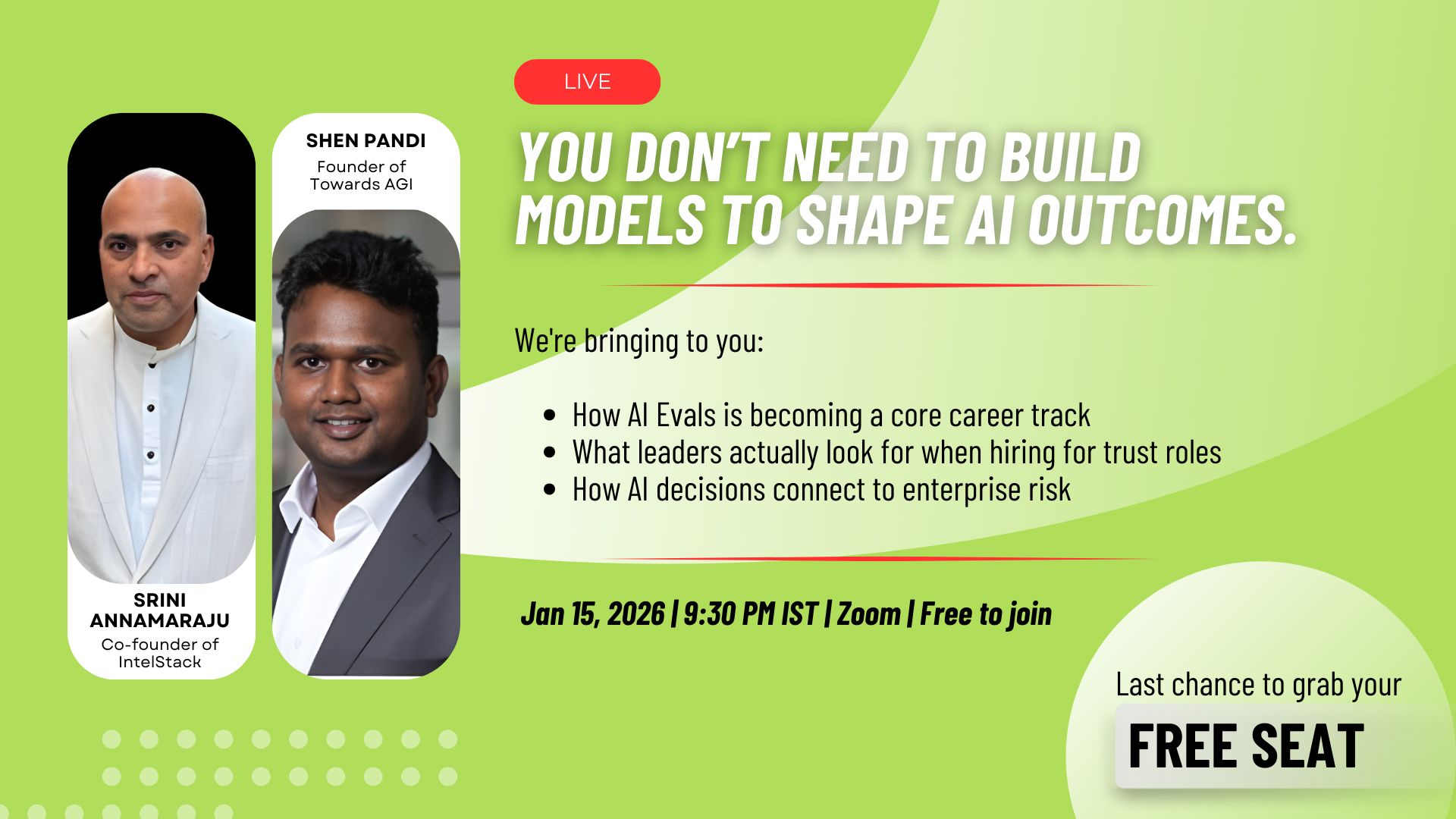
This regulatory pressure lands on a landscape often ill-prepared for it. Your environment is likely a patchwork of legacy databases, cloud platforms, and departmental systems built at different times for different purposes, with little thought for an auditor’s need to trace a business decision back to its raw source.
This fragmentation means your first task is not just to govern data, but to govern the very systems that hold it.
Modernizing this infrastructure, migrating to cloud-based platforms, presents your greatest opportunity. You must seize this moment to embed lineage and governance directly into the new architecture’s DNA.
A modernization effort that only delivers speed and scale but leaves data flows opaque is a half-finished project that replicates old risks in a new environment.
Architecting the Technical Foundation of Trust
Your technical strategy for lineage must be proactive, not retrospective. One powerful approach is the creation of a digital twin of your data infrastructure, a live, continuously updated model that maps how every piece of data flows across your entire ecosystem.

Unlike static documentation that is immediately outdated, this living model provides the real-time visibility you need.
However, its implementation is complex, which is why specialized enterprise platforms have become essential partners. Your choice here is strategic and should reflect your organization’s maturity and specific pain points:
For Fostering Broad Adoption and Accessibility: If your goal is to make lineage understandable and usable for business analysts and decision-makers, not just engineers, you might look to platforms like Alation. They emphasize tracing data from source to dashboard with governance context baked in, prioritizing accessibility and broad adoption to drive cultural change and daily value.
For Governing Fragmented, Complex Enterprises: If you are in a large organization struggling to standardize definitions and workflows across dozens of siloed business units, a governance-first platform like Collibra may be critical. Its graph-based approach connects business glossaries to technical assets, helping you impose order and consistency on a sprawling ecosystem.
For Navigating Heavily Regulated Environments: If you operate in finance, healthcare, or pharmaceuticals, where regulatory depth is non-negotiable, a comprehensive suite like Informatica is often the standard. Its depth handles complex, hybrid environments but demands a proportional investment in dedicated governance teams and implementation expertise.
This technical foundation is your bedrock. But in fulfilling your dual mandate, building it is only half the battle. The architecture itself is meaningless if your stakeholders, from the boardroom to the front lines, don’t understand its value or trust its output.
Mastering the Narrative: Translating Technical Trust into Business Value
This is where your role transforms from architect to ambassador. Different stakeholders measure your success in entirely different languages. Your data stewards care about the adoption rates of certified datasets. Your compliance officers want clean audits with zero exceptions.
Your CEO and board want faster, more reliable strategic decisions and reduced risk. Your singular challenge is to translate the technical achievement of lineage into a compelling business narrative that resonates across all these audiences simultaneously.
You must develop a lexicon of metrics that speak to business relevance, not just technical performance. Consider these as the key performance indicators (KPIs) for your narrative:
The Efficiency Narrative (Speak to COOs and CFOs): Frame data lineage as a driver of operational efficiency. Quantify the hundreds or thousands of person-hours spent monthly on manual data wrangling, cleaning, and “data janitorial” work. Your modernization and governance program is an investment that directly reclaims this time, allowing your valuable talent to focus on analysis and innovation rather than preparation. This is a direct cost-saving and productivity story.
The Risk and Resilience Narrative (Speak to the Board, CRO, and General Counsel): Here, lineage is your primary evidence of control. In ESG reporting, for instance, the SEC now requires auditable trails for emissions data. A robust lineage framework is what prevents claims from being dismissed as greenwashing. For AI, it allows you to demonstrate that even if a model’s internal workings are complex, its training data, prompts, and outputs are logged, controlled, and ethically sourced. This narrative positions you as the provider of the “seatbelt” for the company’s AI acceleration.
The Innovation and Confidence Narrative (Speak to CEOs and Business Unit Heads): Ultimately, high-quality, trusted data is the fuel for innovation. When business leaders trust the data, they are more willing to experiment, deploy predictive models, and enter new markets. Your governance program reduces the “time-to-insight” and increases confidence in analytics. Frame this as enabling competitive advantage: your company can move faster and with greater certainty because its decision-making foundation is verifiably solid.
Bridging the perception gap highlighted by surveys, where C-suite executives often believe data initiatives are more advanced than their teams do, requires relentless, tailored communication.
You must consistently report these business-aligned metrics upwards and outwards, in board reports, investor materials, and internal reviews, to align perception with reality.
Governing the New Frontier: AI, Agents, and Shadow IT
Your dual mandate faces its ultimate test with the rise of generative and agentic AI. These systems introduce a new layer of opacity; the “black box” nature of neural networks means you often cannot explain why an AI reached a specific conclusion.
However, through lineage, you can and must explain with what. This is a crucial distinction for you to master.

While the model’s weights are inscrutable, the data pipeline that fed it is not. You can, and regulators will expect you to document the provenance of training data, log user prompts and system outputs, and track the application of safety filters and guardrails.
For agentic AI, where systems can take autonomous actions, your controls must expand to include goal alignment verification, comprehensive audit trails of decisions made, and well-defined human-over-the-loop protocols for monitoring and override.
Simultaneously, you must combat the rise of “shadow AI”, the use of tools like ChatGPT, Gemini, or Claude via personal accounts and browser extensions that operate entirely outside your governance purview.
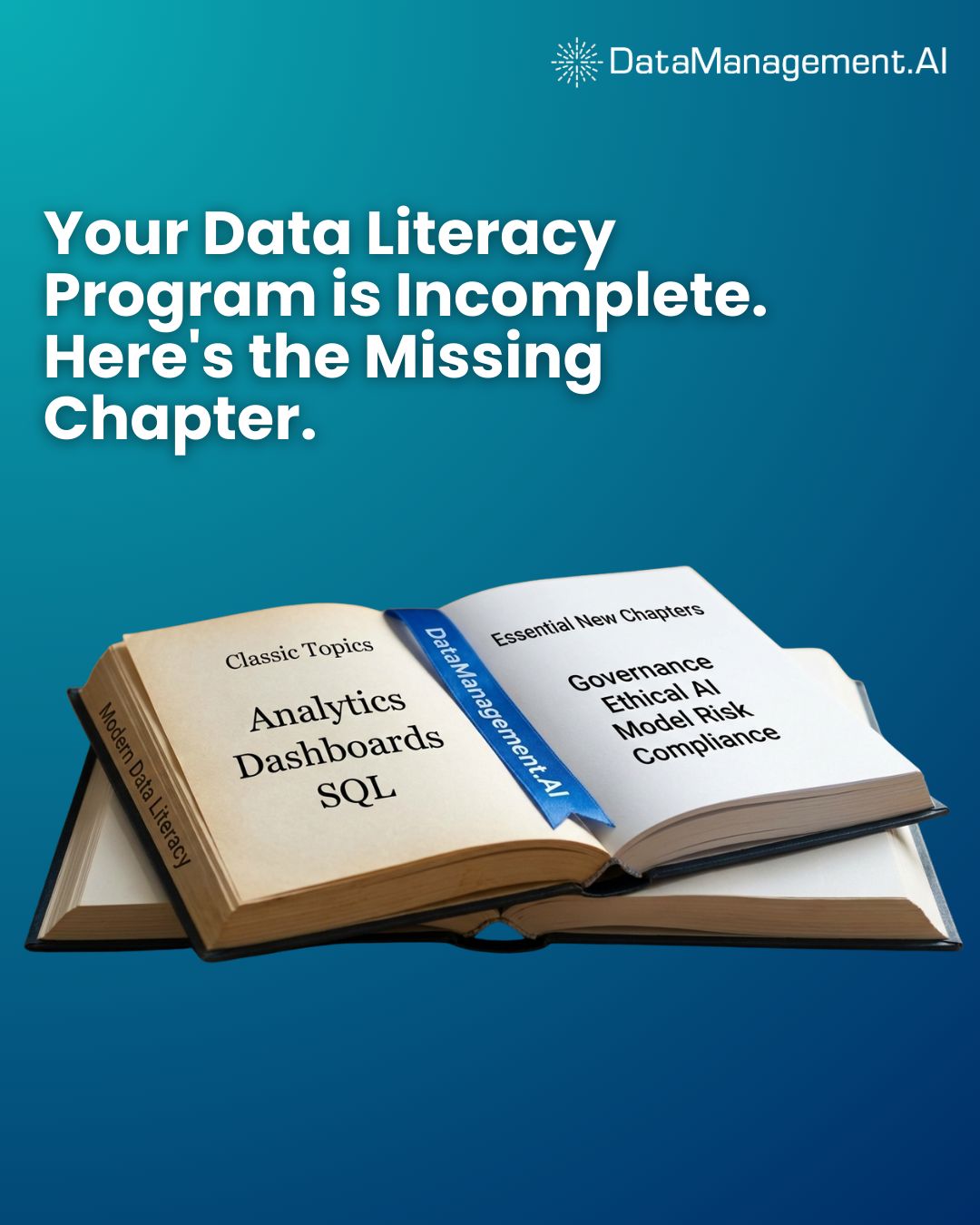
This makes data literacy an even more critical component of your program. You must champion training that goes beyond analytics to encompass governance, ethical AI use, and compliance, ensuring employees understand the risks of using unvetted data and models.
Conclusion: The CDO as the Chief Trust Officer
In the final analysis, your success is measured by the trust you cultivate. Technical infrastructure establishes the capability for trust, but strategic narrative delivers the confidence in that trust.
When a regulator, investor, or board member asks, “Where does your data come from?” you must be prepared to answer not with technical jargon, but with a clear, evidence-based story.
You must articulate how your investments in data lineage and governance directly deliver reduced operational cost, mitigated regulatory risk, accelerated innovation, and enhanced strategic resilience.

By expertly managing this dual mandate, building impeccable technical systems, and crafting the powerful narrative that explains their value, you elevate your function.
You move from being a cost center managing a compliance burden to being a central pillar of the organization’s integrity, agility, and competitive edge. In the age of data, the most valuable currency is trust, and you are its primary architect and issuer.
Warm regards,
Shen and Team