Builders vs. Librarians: Understanding Data Engineering & Data Management
A Simple Analogy for Data Engineering vs. Data Management.

Shen Pandi
December 17, 2025

Data Engineering builds the data "highway," while Data Management sets the "traffic laws" for its use.
Engineers focus on moving and storing data at scale; Managers focus on governing and securing data as an asset.
Data Engineers are the civil engineers and plumbers; Data Managers are the city planners and regulators.
Engineering delivers reliable data pipelines and infrastructure; Management delivers trusted, compliant, and well-documented data.
Engineers need strong programming and systems architecture; Managers need policy design, compliance knowledge, and stakeholder communication.
Your 90-Day Plan To Launch A Career In AI Assessment And Trust

Book Your Spot Today!
Join the first-ever 45-minute online session to explore how you can transition into the fast-growing field of AI assessment, without needing extensive coding or machine learning knowledge.
What You'll learn:
The Emerging Need: How the swift advancement of AI is driving demand for specialists who can verify its dependability.
Your Transition Path: Ways to apply your background in product, QA, data, engineering, or risk management to roles in AI trust and safety.
Your Next Steps: An actionable 90-day plan to develop key experience, engage with AI initiatives, and demonstrate your impact.
Hosted by: Srini Annamaraju & Shen Pandi
Date: Friday, December 19, 2025
Time: 5:00 PM GMT
In the current data era, you are likely encountering two critical and often confused fields: Data Engineering and Data Management. While they share a common foundation in handling data, they represent distinct disciplines with unique purposes, skill sets, and career paths.
This guide will clarify these roles for you, detailing their responsibilities, tools, and future direction so you can understand where you or your organization needs to focus.
Part 1: Defining the Core Missions
Let's start by establishing what each field fundamentally does for an organization.
Data Engineering: Building the Data Highway
Imagine your business generates torrents of data from sales, customer feedback, logistics, and more. This raw information is valuable, but it's often scattered across different systems in incompatible formats.
The role of Data Engineering is to build the infrastructure, the "highway system", that collects, consolidates, transforms, and transports this raw data into a usable state.

Think of a Data Engineer as a civil engineer for data. They design and construct the pipelines, storage facilities (data warehouses/lakes), and processing systems.
Their core mission is to ensure that data flows reliably from its many sources to a destination where it can be effectively analyzed.
Without this engineered foundation, data scientists, analysts, and business leaders cannot perform their jobs efficiently.
They solve the critical problem of heterogeneity, where answering a simple business question becomes a nightmare because customer information is locked in separate systems for billing, support, and orders.
Data Management: Governing the Data City
Once the data highway is built, you need rules, security, and organization. This is the realm of Data Management. If Data Engineering is about the movement and storage of data, Data Management is about its oversight, quality, security, and strategic use.
It encompasses the policies, processes, and people that ensure an organization's data is accurate, accessible, secure, and used ethically and effectively.

Think of a Data Manager as the city planner and policy maker. They establish the governance framework: Who owns this data? How long do we keep it? Who can access it? Is it accurate and consistent?
They work to break down data silos, implement security protocols, and ensure compliance with regulations like GDPR or CCPA.
Their goal is to transform raw data into a trusted, strategic asset that drives sound decision-making. With the explosion of data from AI, IoT, and cloud computing, this discipline has become non-negotiable for mitigating risk and extracting value.

Part 2: Your Detailed Role Breakdown, Responsibilities, and Skills
Understanding the day-to-day tasks and required skills will help you distinguish these career paths or organizational needs.
Data Engineer, The Builder's Responsibilities:
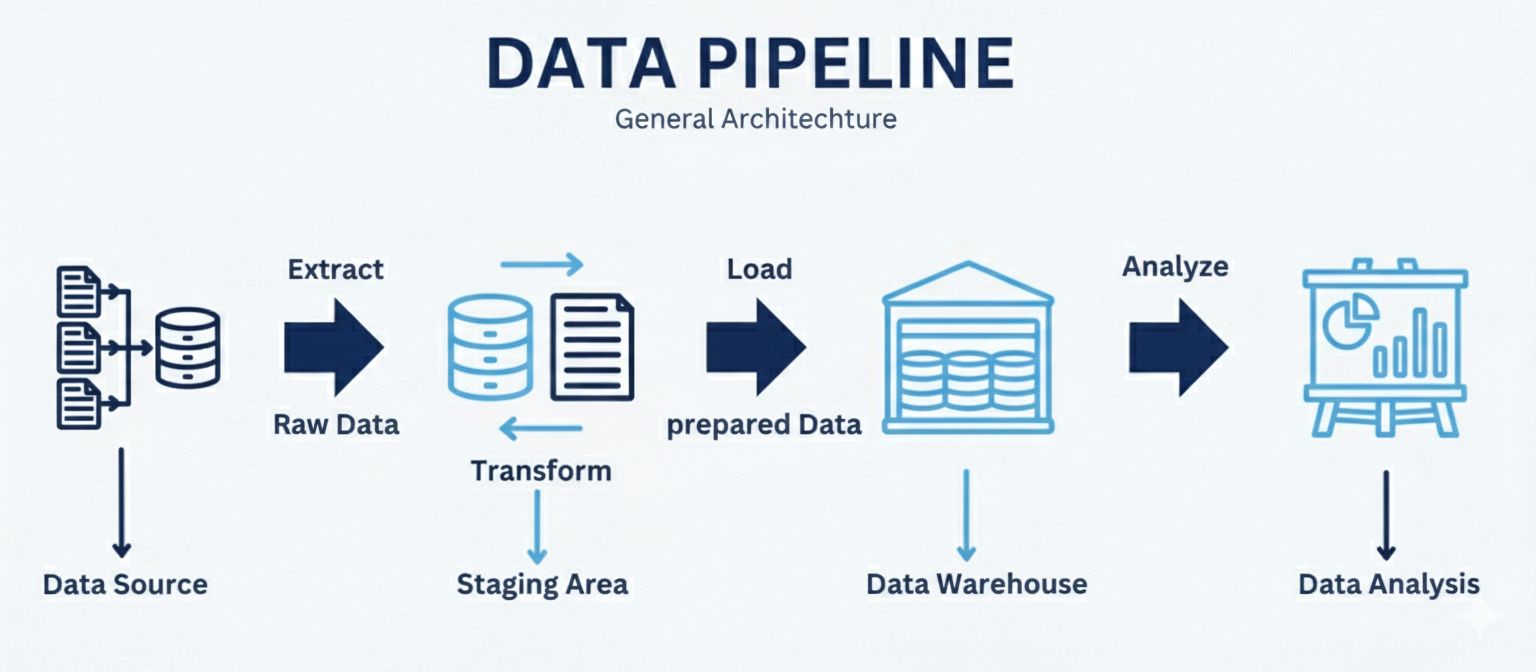
Your focus as a Data Engineer is technical implementation. Key responsibilities include:
Designing & Building Data Pipelines: Creating automated workflows that ingest data from APIs, databases, logs, etc.
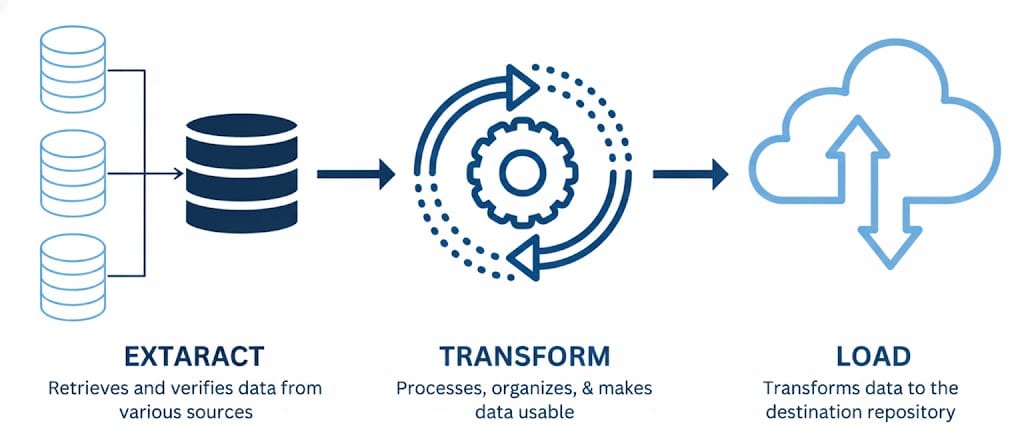
Developing ETL/ELT Processes: Writing code (often in Python, Scala, or SQL) to extract, transform, and load data.
Architecting Data Storage: Building and maintaining scalable data warehouses (e.g., Snowflake, BigQuery) or data lakes (e.g., on AWS S3).
Ensuring Data Quality & Reliability: Implementing monitoring and validation to ensure pipeline accuracy and uptime.
Data Modeling: Designing the structure of databases for optimal storage and query performance.
Optimizing Systems: Tuning pipelines and queries for performance and cost-efficiency, especially in cloud environments.
Tool & Tech Integration: Selecting and integrating databases, big data frameworks (Spark, Hadoop), and cloud services.
Troubleshooting: Debugging pipeline failures and data quality issues.
Data Manager, The Governor's Responsibilities:
Your focus as a Data Manager is strategic oversight. Key responsibilities include:
Developing Data Governance Policies: Creating the rules for data usage, quality, privacy, and lifecycle management.
Ensuring Security & Compliance: Implementing access controls, encryption, and auditing to meet regulatory standards.
Managing Data Acquisition & Integration: Overseeing the strategy for bringing new data sources into the governed environment.
Overseeing Storage & Retrieval Strategy: Defining how and where data should be stored for a balance of access, cost, and security.
Upholding Data Quality Standards: Establishing metrics and processes for continuous data accuracy and consistency checks.
Managing Metadata & Lineage: Maintaining data catalogs and dictionaries, and tracking data origin and transformations.
Stakeholder Collaboration: Working with business units to understand their data needs and ensure the governance framework supports them.
Managing Access & Sharing: Controlling who can see and use specific data assets.
Your Skillset Comparison:

1) Data Engineer: You need strong programming (Python, Java, Scala), expertise in SQL and NoSQL databases, deep knowledge of cloud platforms (AWS, Azure, GCP), and big data technologies (Apache Spark, Kafka, Hadoop).
Your mindset is analytical, problem-solving, and systems-oriented.
2) Data Manager: You need strengths in policy design, project management, and communication. A solid understanding of data governance frameworks, compliance law (GDPR, HIPAA), data security principles, and business process analysis is crucial.
Technical literacy is important, but your primary tools are governance platforms (like Collibra or Informatica Axon), visualization tools (Tableau, Power BI), and collaboration software.
Part 3: Data Governance, The Unifying Framework for You
This is the critical concept that connects both fields. Data Governance is the overarching system of decision rights and accountabilities for data-related matters. It's the constitution for your organization's data.
For You, the Data Engineer: Governance provides the blueprint. It tells you the standards to code into your pipelines: What naming conventions to use? What quality checks must be passed before data is stored? What encryption is required? You implement the governance rules into the physical infrastructure.
For You, the Data Manager: Governance is the rulebook you create and enforce. You define the policies for quality, set retention schedules, assign data ownership, and mandate lineage tracking. You ensure the rules are followed and evolve them as business needs change.
In essence, Data Engineering builds the governed system, and Data Management defines and oversees the governance itself. They are two sides of the same coin, both essential for a mature data practice.
Part 4: Your Toolbox, What You'll Use
The Data Engineer's Technical Stack:
Your workbench consists of:
Databases: | PostgreSQL | MySQL | MongoDB | Cassandra |
Big Data Frameworks: | Apache Spark | Hadoop | Flink | |
Cloud Services: | AWS (Glue, Redshift, S3) | Azure (Data Factory, Synapse) | GCP (BigQuery, Dataflow) | |
Pipeline & ETL Tools: | Apache Airflow | dbt | Talend | Fivetran |
Data Warehouses: | Snowflake | Redshift | BigQuery | Databricks |
Version Control: | Git | GitHub | GitLab |
The Data Manager's Platform Stack:
Your command center is built on:
Data Governance Platforms: | Collibra | Alation | Informatica Axon & EDC | |
Data Quality Tools: | Great Expectations | Monte Carlo | Soda Core | |
Visualization & BI: | Tableau | Power BI | Looker (for monitoring data health and usage) | |
Project & Collaboration: | Jira | Asana | Slack | Microsoft Teams |
Security & Compliance Tools: | Encryption software | Identity and access management (IAM) systems. |
Part 5: The Future Outlook for Your Career and Strategy
Both fields are evolving rapidly. Here’s what you should prepare for.
Future Trends in Data Management:
Efficiency & FinOps: You will be expected to do more with less, optimizing cloud spend and automating governance to reduce costs.
Data as a Product: You will manage data assets with the same rigor as software products, ensuring they are documented, discoverable, secure, and user-friendly for internal "customers."
Active Metadata: Static data catalogs are becoming dynamic. Metadata will automatically drive governance actions, impact analysis, and data quality checks.
Integrated Data Governance: Governance will not be a separate exercise but woven directly into the tools used by engineers and analysts.
Analytics Engineering: You will see the rise of this hybrid role, sitting between engineering and analysis, transforming raw data into analytics-ready datasets using software engineering best practices.
Future Trends in Data Engineering:
Real-Time Data Streaming: Building pipelines for real-time event processing (using Kafka, etc.) will be standard for use cases like fraud detection and personalization.
AI & Automation in Engineering: AI will help you auto-document pipelines, suggest optimizations, and even generate boilerplate code, letting you focus on complex architecture.
Data Contracts: You will establish formal agreements between data producers (your pipelines) and consumers (analysts), defining the schema, freshness, and quality guarantees of data products.
Enhanced Security by Design: Security and privacy controls (like differential privacy) will be integrated into the pipeline architecture from the start.
MLOps Convergence: You will work closely with data scientists to operationalize machine learning models, building the pipelines that feed them and monitoring their performance in production.
The Final Showdown
To distill it for your understanding:
You need Data Engineering to build and maintain the technical infrastructure that moves and stores data. It's about the how.
You need Data Management to govern, secure, and optimize the data asset itself. It's about the what, who, and why.
You cannot have effective data management without the solid pipelines built by data engineering. Conversely, the most sophisticated data pipeline is a liability without the governance provided by data management. They are symbiotic.
For your organization, the question isn't "Which one do we choose?" but "How do we invest in both to create a virtuous cycle?" Start by building foundational pipelines (engineering) while simultaneously establishing basic governance policies (management).
For your career, assess whether your passion lies in the deep technical construction of systems (Engineering) or in the strategic stewardship of data as a business asset (Management). Both paths are critical, in high demand, and offer a front-row seat to shaping the data-driven future.
Warm regards,
Shen and Team