87% of AI Budgets Are Wasted. Is Yours One of Them?
Data access democratization must come first!

Shen Pandi
May 13, 2026
Unlock the Edge
87% of AI Investments Are Failing. Is Your Database Why?
Your AI Agents Are Ready. Your Data Infrastructure Is Not.
The Fragmentation Problem Silently Killing Your AI Rollout
95% of Leaders Want an AI Platform. Most Won't Get There.
Every Month You Wait, Your Competitors Pull Further Ahead.
Greetings,
87% of enterprises are not getting real ROI from their AI investments right now. If that number stings a little, good. It means you are paying attention.
Here is the shift happening underneath the surface that your data strategy needs to catch up with.
Your AI Agents Are Ready. Your Database Is Not.
Only 13% of enterprises globally are delivering real, measurable value from their AI investments. That means 87% of organizations are running pilots, signing contracts, and building roadmaps that stall long before they hit production.
You are probably in that 87%. Not because your strategy is wrong or your team lacks capability. But the foundation underneath your entire AI ambition is quietly, steadily working against you every single day.

The Story Most Organisations Are Living Right Now
Your team approved the AI budget. They sat through the vendor presentations, signed the contracts, and shipped the first proof of concept on time and on budget. Everyone celebrated. Then production planning started.
Now, six months in, your AI agents are running slower than anyone expected. Your engineers are not building new features. They are debugging data pipelines and stitching together incompatible systems that were never designed to work together at this scale.
Here Is Why That Is Happening
The models are not the problem. They were ready long before you needed them. The real problem is sitting underneath everything else, quietly bottlenecking every agent your team attempts to deploy in a real production environment.
Your data infrastructure was built for a different era of computing. And every week you continue scaling AI on top of it, the gap between your AI ambitions and your actual delivery widens.
Your Agents Work Differently Than You Think
When your AI agents go to work, they do not behave like traditional applications. They do not make simple, predictable database queries. They plan, reason, and act, often breaking one user request into dozens of parallel sub-tasks simultaneously.
Your Database Was Never Built for This
Each sub-task needs fast, contextually rich access to live enterprise data. Relational records, unstructured documents, vector embeddings, and graph relationships, all at once. Most enterprise databases were never designed for this kind of concurrent demand.
They were built for transactional reliability in a slower, more predictable world. So when your agents reach out for what they need, they get fragmented responses, incomplete context, and slow retrieval, which compounds into failed deployments.
What Happens Next Is Costing You
Your developers stop building features and start firefighting. The AI initiative that was supposed to transform your operations becomes an expensive maintenance cycle that eats budget without delivering the business outcomes you promised your board.
And the deeper you go into your current stack, the clearer it becomes. The architecture you have built, layer by layer, over the past decade, was never designed to serve the demands of autonomous AI agents working across your entire business simultaneously.
You should not be navigating this alone. Talk to our team today and find out how to fix your data foundation before your next AI deployment stalls.
Why Most Enterprises Will Not Hit Their AI Target.
A recent industry survey of enterprise leaders across North America, Europe, and the Asia Pacific found that 95% of them shared one mission-critical goal: to become their own AI and data platform within 1,000 days. That is an ambitious target.
But most organizations are trying to reach that future with fragmented data stacks and outdated infrastructure assumptions. They treat their databases as passive systems of record while trying to run active, autonomous agents on top of them.
That combination does not work. Autonomous agents need an active, not passive, database layer. They need infrastructure that is purpose-built for the demands of agentic AI, not adapted from tools designed for a completely different era of enterprise computing.
The organizations pulling ahead are not using better models than yours. They are deploying AI across more than ten business functions simultaneously because they got their data infrastructure right from the start, achieving five times the ROI of their peers.
Every new agent they build makes the next one easier and faster to deploy. They are building momentum. In AI infrastructure, that momentum compounds faster than almost any other competitive advantage available to enterprise organizations operating at scale today.
Here Is the Real Reason Your AI Projects Keep Stalling Before They Scale
The root cause of most enterprise AI stalls is data fragmentation. Your organization has one database for transactional data, another for analytics, another for vector storage, and possibly more for graph relationships or unstructured content.
Each was the right decision at the time. Together, they have created a patchwork architecture that your AI agents cannot navigate efficiently. Every new use case adds another layer of complexity on top of an already fragile foundation.

Every new agent your team builds has to independently connect to all of these systems. Every new integration creates another failure point, another bottleneck, and another reason for your production timeline to slip further to the right.
And here is the compounding problem most organizations do not confront until it is too late. The more fragmented your data infrastructure becomes, the more expensive it gets to maintain and the slower every future AI deployment will run.
This is not a resourcing problem. You could double your engineering headcount and still face the same structural limitations if the underlying data architecture is working against your agents instead of supporting them.
How to Turn Your Data Infrastructure Into a Competitive Advantage
DataManagement.AI is built specifically for organizations like yours:
Companies that are serious about scaling AI but keep running into the data infrastructure wall that stops most enterprises before they ever reach production at meaningful scale.
Instead of managing a fragmented patchwork of data systems, DataManagement.AI gives your AI agents a unified, active data layer. Fast access. Consistent context. Reliable performance at scale.
Your agents get what they need, when they need it. No custom connectors. No pipeline patching. Your team focuses on building AI that moves the business forward.
Every new agent you deploy on DataManagement.ai ships faster than the last. That compounding effect is what purpose-built agentic infrastructure delivers from day one.
You also gain full sovereignty. Complete control over your data, models, and deployment choices. No vendor constraints. No speed limits when the market shifts.
And DataManagement.AI works with your existing systems. No overhaul. No disruption. Just the unified layer your agents need to perform at scale.
Three Things to Do Before Your Next AI Deployment
Audit your current architecture for agentic readiness. Map every system your AI agents need to access and identify where the handoffs break down. Most teams find three to five critical failure points within the first hour of doing this honestly.
Stop adding specialized databases to solve new AI requirements. Every isolated system you add makes the fragmentation problem worse, not better. Before adding another tool, ask whether the requirement can be handled within a unified data layer instead.
Test your infrastructure with a genuine production workload, not a proof of concept. Demos hide real performance gaps. A production-grade test will show you exactly where your agents are failing and why, before your customers experience it firsthand.
These three steps will not fix the underlying architecture problem on their own. But they will give you an honest picture of where you actually stand, which is the most important thing you can know before your next AI investment decision.
The AI Gap Is Growing Every Quarter
Enterprise organizations that invested early in unified, sovereign data infrastructure are now scaling AI across entire business functions while their competitors are still debugging their first production release. That gap is not closing. It is growing every quarter.
The difference is not better models, bigger AI teams, or higher AI budgets. The difference is infrastructure. Organizations that built a unified, active data layer first are compounding their advantage, while others are compounding their technical debt.
Every month spent maintaining a fragmented data stack is a month your competitors are using to ship new AI capabilities, enter new markets, and lock in advantages that will take years to close. The cost of delay is not linear. It compounds.
You have already identified the problem by reading this far. Your AI agents are stalling because your data infrastructure was not built to support them at scale. That is the most important thing to understand. And it is entirely fixable.
What Fixing It Actually Looks Like
The data infrastructure problem is completely solvable. You do not need to tear down what you have built. You need a unified data layer that works alongside your existing systems and gives your agents what they need to perform at scale.
What Changes When You Fix the Foundation
When that layer is in place, your development team stops firefighting and starts shipping. Your agents perform the way your models were always capable of. Your time to production on new AI use cases drops from months to weeks.
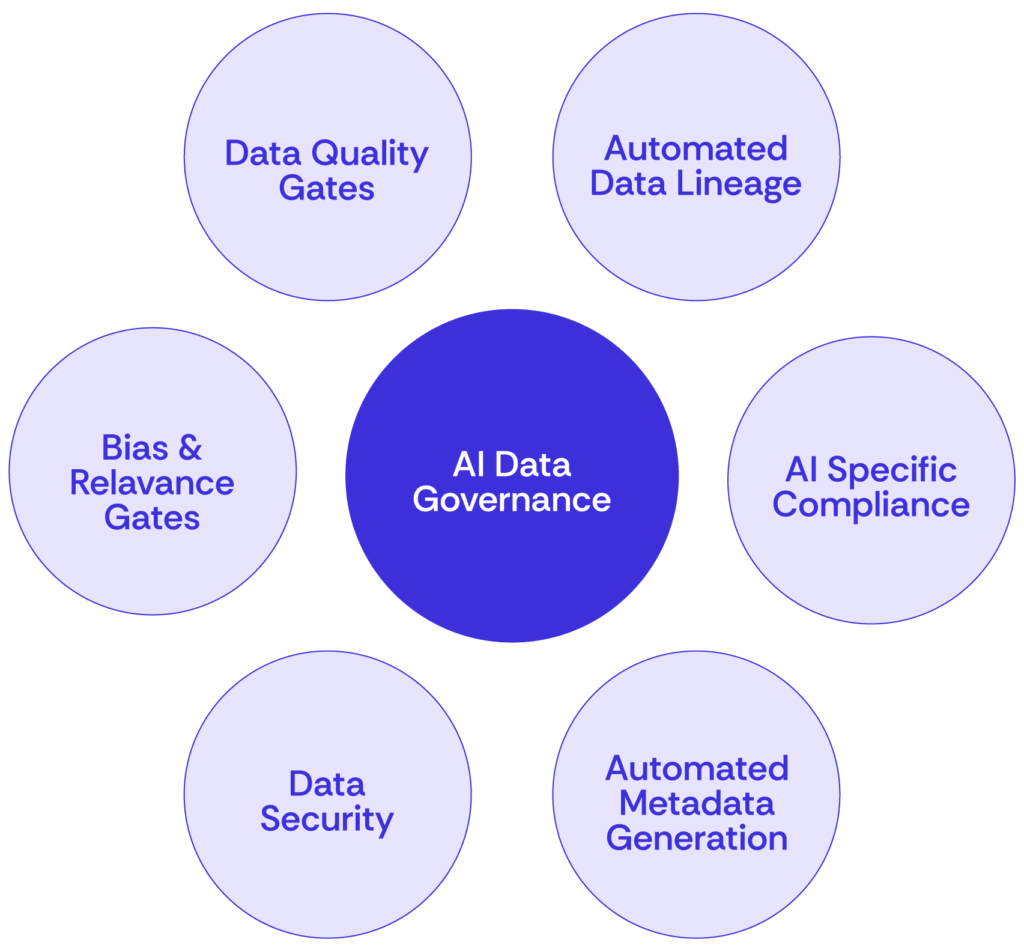
And every deployment after that first one becomes faster, cheaper, and more impactful than the one before it. That is what AI momentum looks like when it is built on the right foundation.
Here Is Where AI Comes In
DataManagement.AI helps enterprise leaders get there. Whether you are preparing for your first production AI deployment or trying to break through a scaling wall you have been hitting for months, the conversation starts with your data architecture.
Eighty-seven percent of enterprises are losing the AI race right now because they are building on the wrong foundation. You know your foundation needs work. The next step is doing something about it before another quarter passes.
Check how DataManagement.AI works and see exactly how organizations like yours are building the data infrastructure that makes AI work at scale, before your competitors make that move first.

Warms regards,
Shen Pandi & DataManagement.AI team